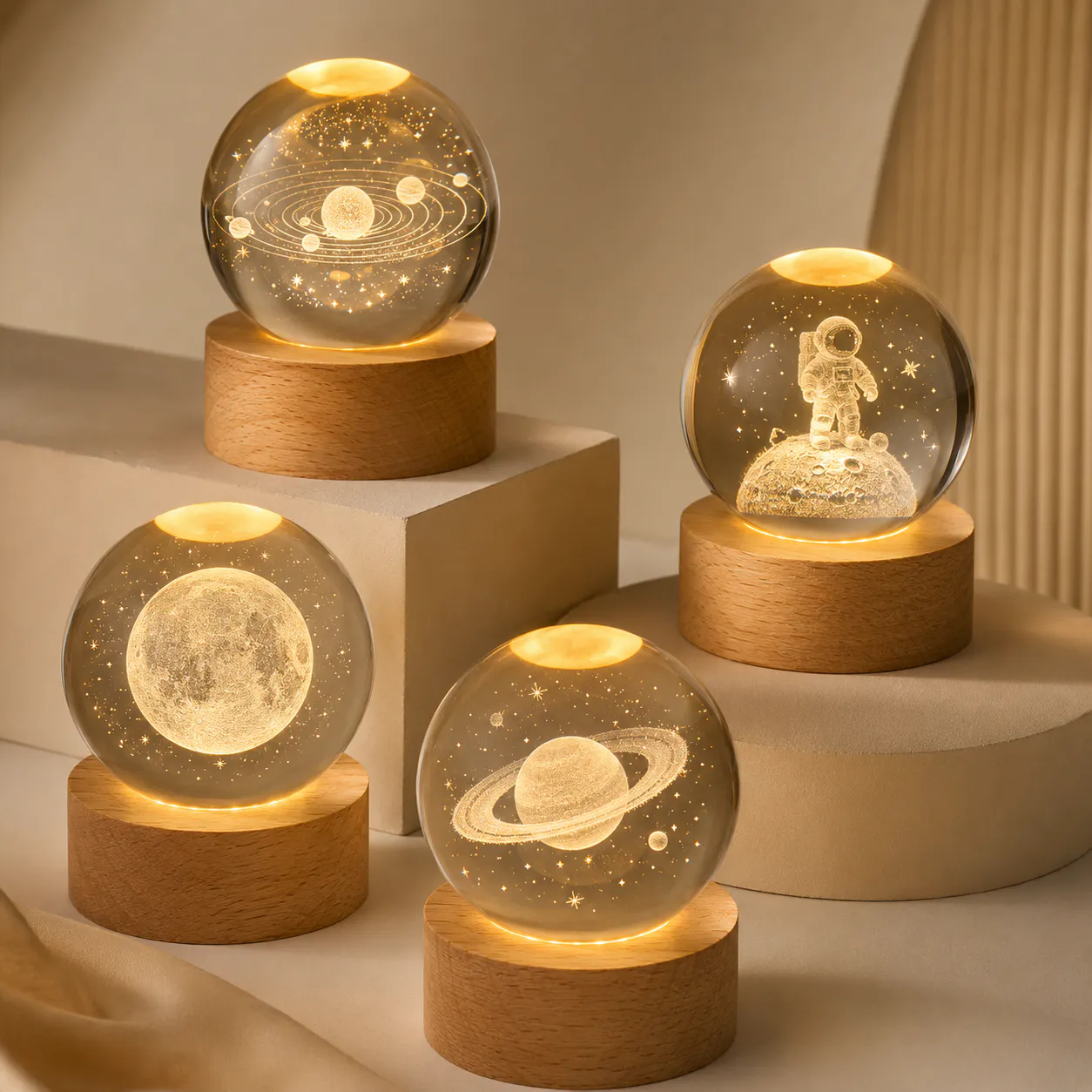
Compare crystal and acrylic photo lights by visual depth, artwork style, weight, personalization, packaging and retail position. Use the Crystal Night Lightscollection as a starting point, then verify the exact model and requested changes before quotation.
Decisions to make before requesting a quote
| Decision | What to define |
|---|---|
| Visual effect | Crystal emphasizes internal detail and depth; acrylic supports edge lighting, outlines and selected print treatments. |
| Weight | Crystal normally needs stronger inserts and a stable base; acrylic is lighter but still needs surface protection. |
| Artwork | Portrait conversion differs from line engraving or full-color printing. |
| Use case | Match the material to gifting, awards, décor, retail price position and handling. |
Material changes the artwork strategy
A photograph prepared for an internal crystal image should not be copied directly to an edge-lit acrylic panel. Acrylic often benefits from strong lines, contrast and controlled printed areas, while crystal needs a composition that reads within the internal volume.
Compare the complete landed presentation
Do not compare only the illuminated piece. Include base, power, protective film or cleaning needs, package volume, freight sensitivity and the way the customer opens and displays the product.
Information to include in the brief
- Target retail or gift position
- Portrait, logo, line art or full-color artwork
- Preferred product weight and display location
- Base, power and control requirements
- Packaging and delivery route
Keep the approved product, artwork, power arrangement, accessories and packaging in one version-controlled brief. If a requested change affects dimensions, tooling, electronics, materials or performance, treat it as an engineering assess rather than assuming it belongs to the standard model.