Compare tabletop acrylic desk signs and wall-outlet night lights by placement, artwork scale, power and retail use. Start with the Acrylic Night Lightscollection, then connect the chosen platform to a controlled artwork, packaging and approval brief within the desk sign vs plug-in acrylic night light decision path.
Decisions to make before requesting a quote
| Decision | What the buyer should define |
|---|---|
| Placement | Compare desk, shelf, counter and wall-outlet use. |
| Artwork area | Match text and graphics to the realistic viewing distance. |
| Power | Review cable or battery needs against direct plug installation. |
| Customer setup | Compare base insertion with outlet clearance and orientation. |
The formats solve different display problems
A desk sign can carry a broader message, while a plug-in product saves surface space and becomes part of the wall environment. One design should not be resized blindly between them.
Use context photography in approval
Show the proposed product at its normal placement and viewing distance. This reveals whether text, brightness and proportions make sense.
How to compare supplier responses — desk sign vs plug-in acrylic night light planning
Compare quotations against the same product model, artwork version, included accessories, packing level and destination requirements. A lower unit price is not comparable when one quote omits the approved control method, protective insert, printed materials or individual packing within desk sign vs plug-in acrylic night light planning. Ask every supplier to separate standard-platform items from changes that require engineering assess for the desk sign vs plug-in acrylic night light review.
Request supporting evidence at the level appropriate to the order: a dimensional drawing for fit, an artwork proof for position and spelling, a working sample for light and control behavior, and a packed sample when presentation or shipping protection matters. document exceptions in the brief instead of relying on chat history within the desk sign vs plug-in acrylic night light review.
Sampling and approval sequence — desk sign vs plug-in acrylic night light workflow
Approve the standard product platform first. Next approve the visible treatment—shape, artwork, color and finish—before confirming packaging within the desk sign vs plug-in acrylic night light workflow. For personalized or multi-variant orders, approve one master layout and maintain a numbered schedule that connects each file to its quantity and packing identity for the desk sign vs plug-in acrylic night light decision path.
Changes to dimensions, tooling, electronics, materials or performance must follow the appropriatecustom development solution within desk sign vs plug-in acrylic night light planning. Keeping Private Label, OEM / Build-to-Print and Full ODM Development routes separate makes cost, responsibility and lead-time discussions clearer within the desk sign vs plug-in acrylic night light review.
Information to include in the RFQ
- Intended room and placement
- Viewing distance and artwork size
- Power and control preference
- Destination outlet reference
- Retail positioning and pack size
Keep the approved model, artwork, power arrangement, accessories, labels and packaging in one version-controlled file. State quantity by version, destination market and required arrival date within the desk sign vs plug-in acrylic night light workflow. This gives the factory enough information to confirm feasibility without changing the original product record or making unsupported assumptions within the desk sign vs plug-in acrylic night light workflow.
Separate daytime messaging from overnight orientation light
An illuminated desk sign is normally read head-on and can prioritize a logo, room name or call to action. A plug-in acrylic night light is viewed from several angles and must provide gentle orientation without creating glare near a bed, hallway or socket. The required brightness, artwork density and control behavior therefore differ.
- For a desk sign, test letter recognition at the actual counter or reception distance.
- For a plug-in night light, check wall clearance, socket direction and whether the panel blocks the second outlet.
- Specify dimming or automatic light sensing when the unit may operate through the night.
- Review cleaning access and panel removal differently for a fixed socket product and a movable desktop base.
Approve each option in its intended ambient light level. A bright showroom sample can hide nighttime glare, while a dark-room photograph can exaggerate the legibility of a reception sign.
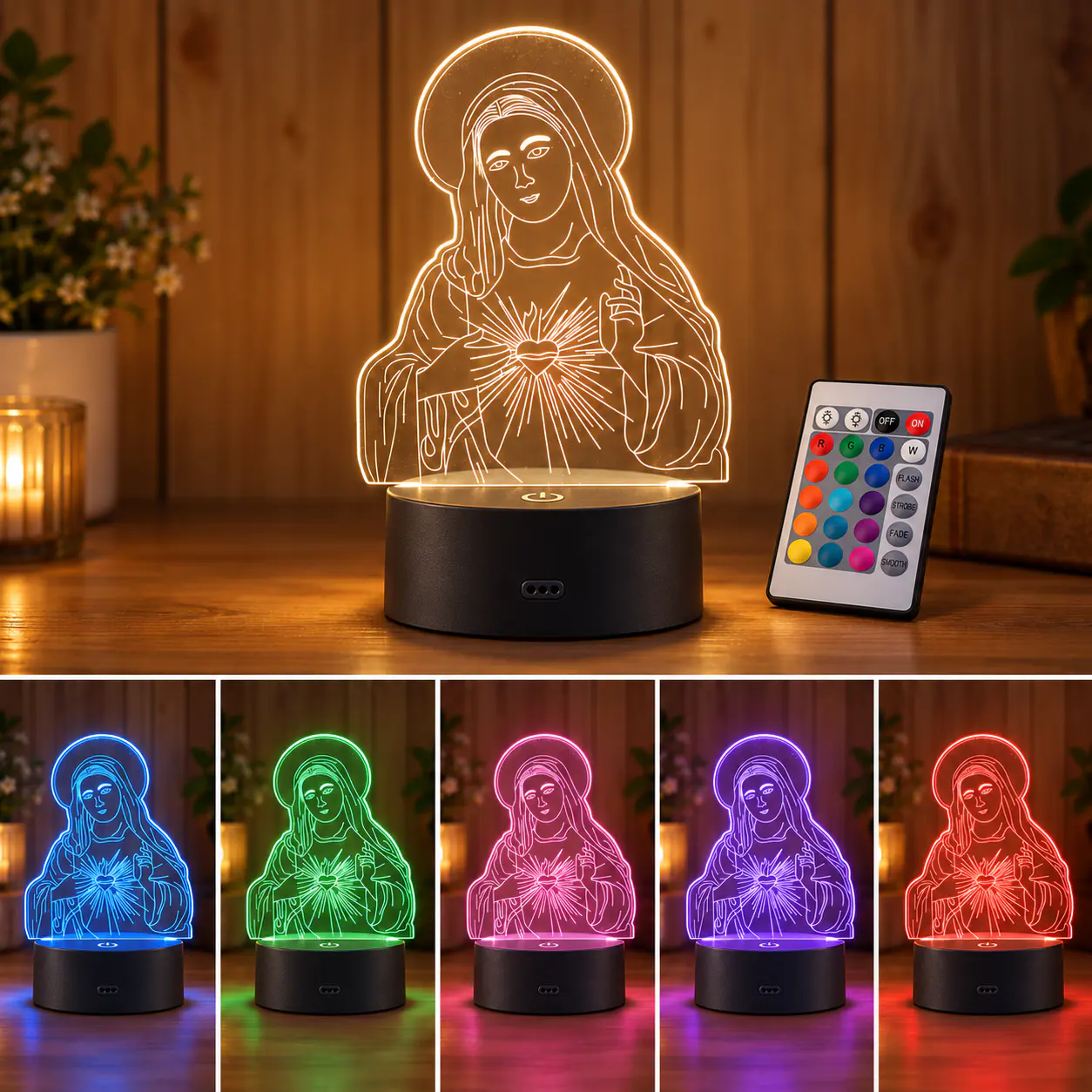 RGB Acrylic 3D Illusion Night Light
 Rechargeable 7-Color Acrylic LED Desk Sign
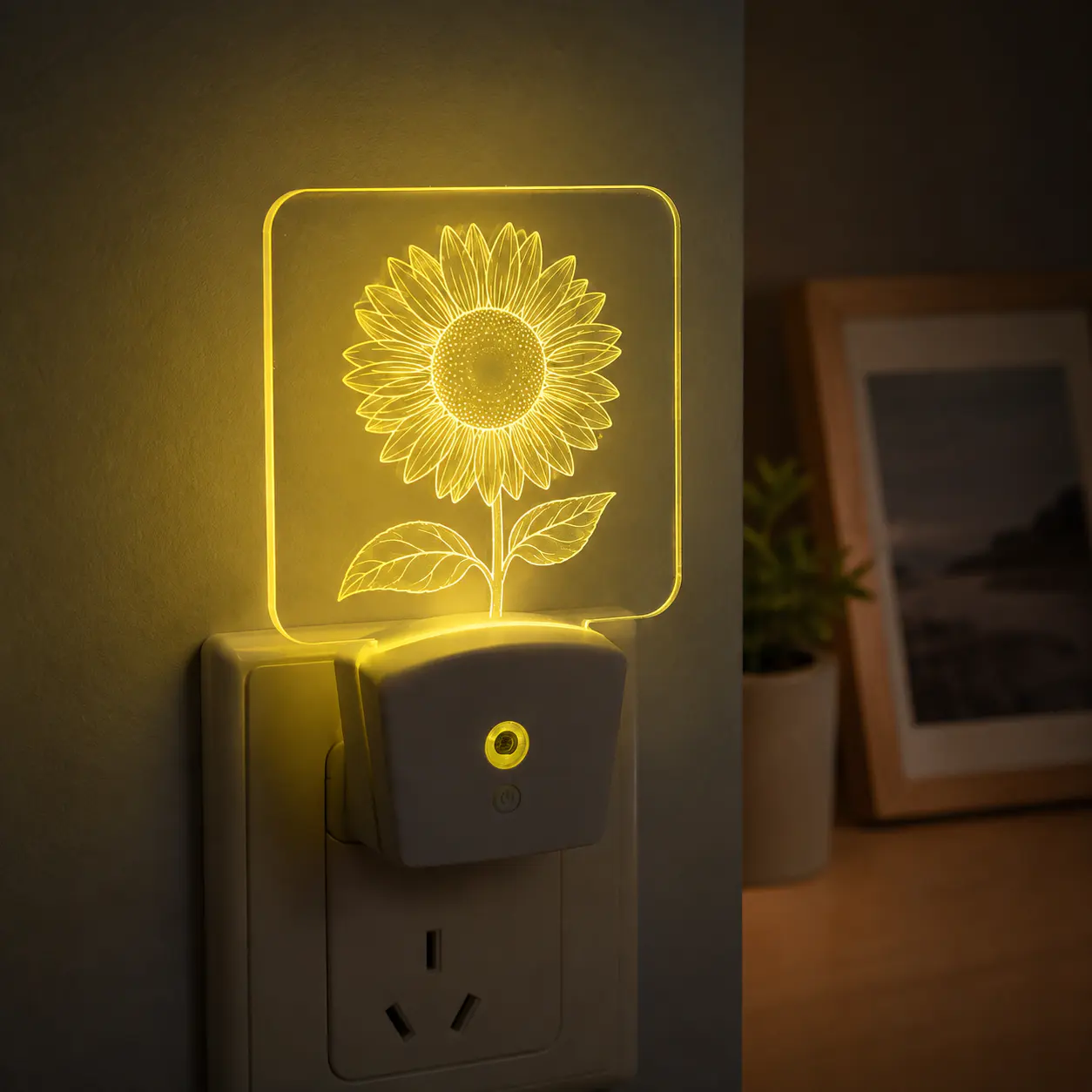 RGB Plug-In Acrylic Night Light