A pin is a straightforward attachment for broad event distribution, while a magnet is useful when the wearer wants to avoid puncturing a uniform or garment. The correct choice also depends on badge weight, garment thickness, movement during use and the way the badge will be handed out.
Compare the attachment around real use
| Question | Pin | Magnet |
|---|---|---|
| Garment impact | Pierces the fabric | Avoids a pin hole |
| Distribution | Simple for general hand-out programs | Two-part attachment must stay paired |
| Garment thickness | Check pin length and closure | Holding force varies with fabric layers |
| Badge weight | Check rotation and pull on fabric | Check slipping, separation and balance |
| Repeated wear | Suitable when the garment accepts a pin | Useful for uniforms where punctures are undesirable |
Match the choice to the published model
The standard BW51A plastic badge uses a rear pin. The BW52A rechargeable metal badge lists pin or magnet attachment. A buyer requesting a different attachment should identify the exact model because the housing, available internal space and total badge weight affect the review.
Test the attachment with the intended garment
A desk check is not enough when the badge will be worn through a long shift, a crowded event or active movement. The approval sample should be reviewed on representative fabric. Confirm whether the badge stays level, whether the closure can be operated easily and whether the wearer can remove it without damaging the garment or losing a separate magnetic back.
Add attachment requirements to the artwork brief
Logo position, horizontal balance and the orientation of a rectangular badge can change where the attachment should sit. Mark the required top direction and any name or logo safe area. If several names or designs share one housing, use the same attachment reference in every artwork file so the series remains consistent.
- Exact product model and approximate badge orientation
- Pin or magnet preference
- Typical garment or fabric layers
- One-time hand-out or repeated staff use
- Packaging method for loose or individual units
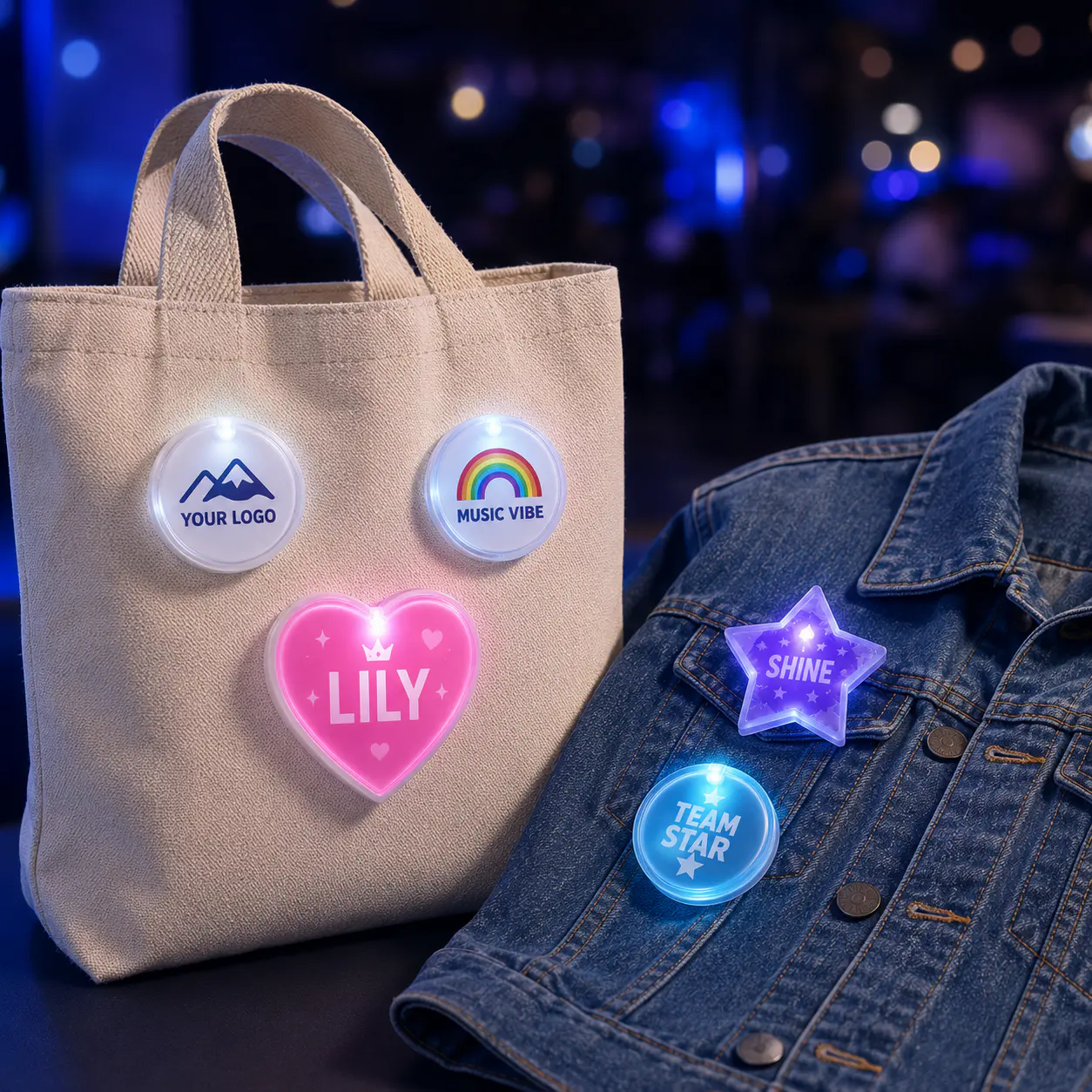 Custom Shape LED Light-Up Badge
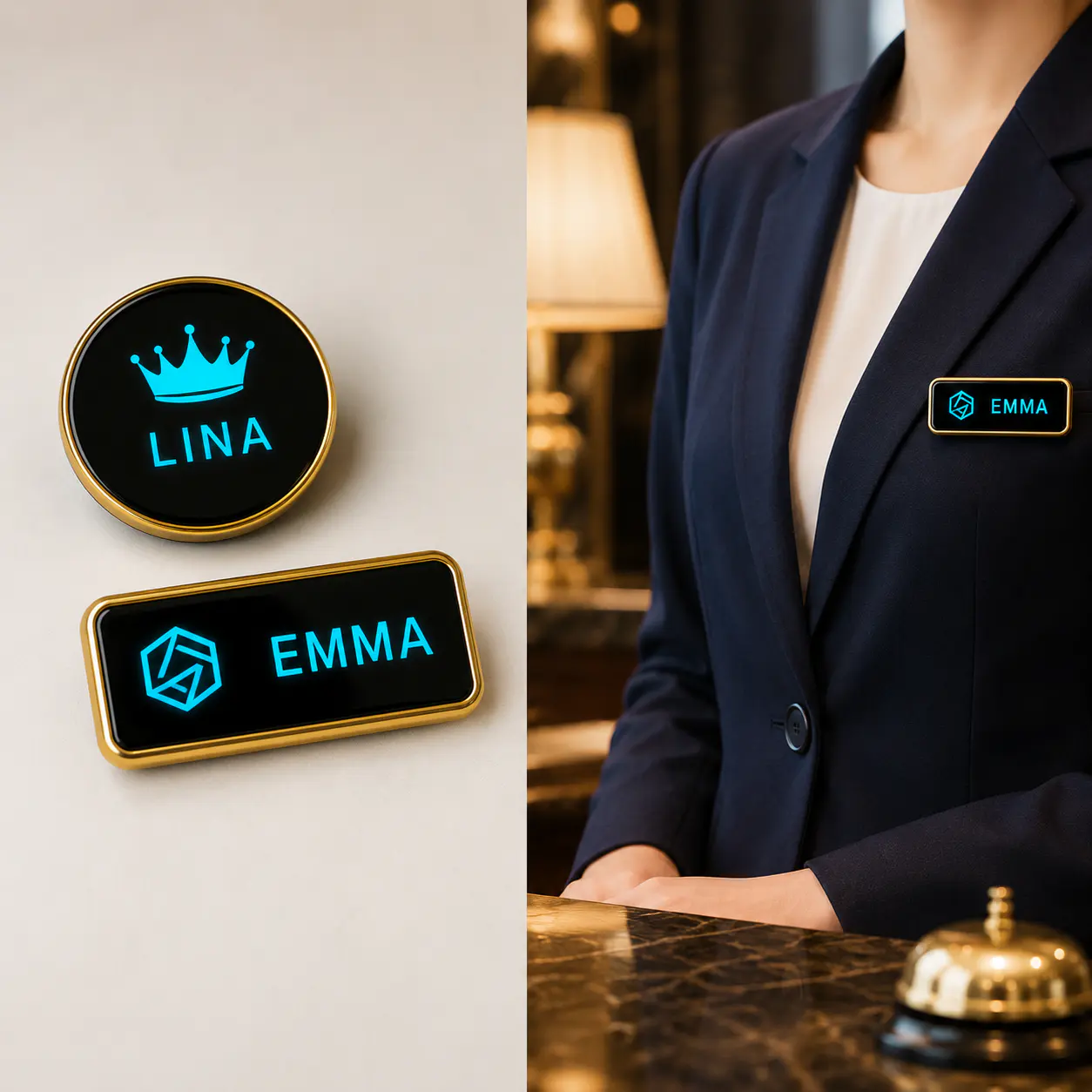 Rechargeable Metal LED Event Badge
 15-Color LED Staff Name Badge